
How does the humidity in Chennai affect engine performance and tire grip during a 10-lap race at Irungattukottai?
Discover how Chennai’s humidity impacts engine performance and tire grip during a 10-lap race at Irungattukottai, and what racers can do to adapt and stay competitive.
Racesforall
2/1/20262 min read
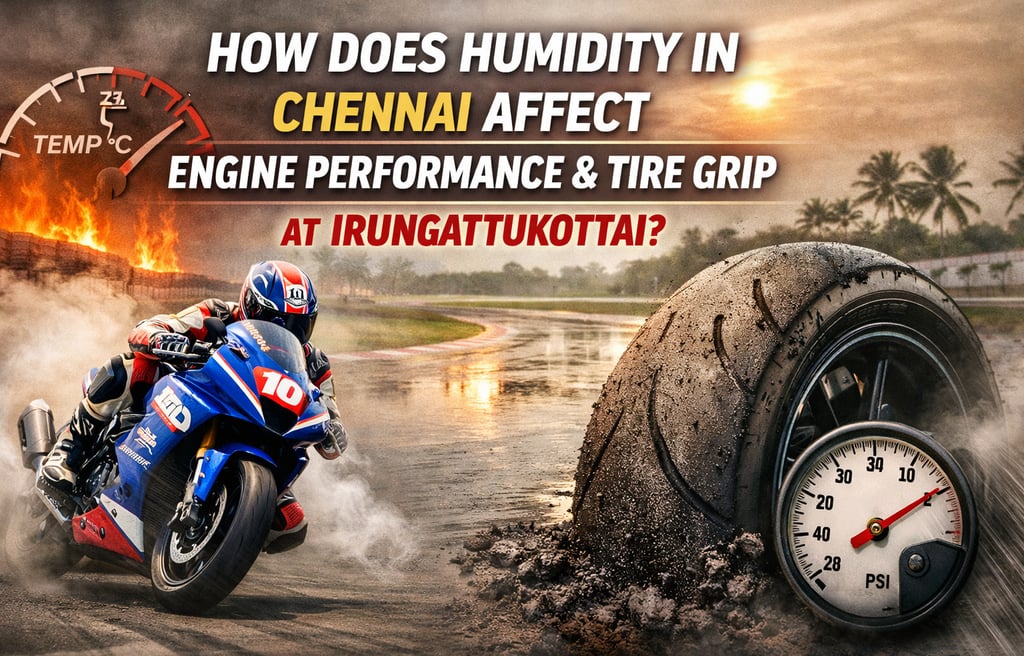
Racing at Irungattukottai, Chennai, presents unique challenges due to high temperatures and persistent humidity. Riders and drivers often ask:
How does the humidity in Chennai affect engine performance and tire grip during a 10-lap race at Irungattukottai?
Understanding these effects can help racers prepare better and stay competitive.
Understanding Chennai’s Humidity and Track Conditions
Chennai typically experiences high relative humidity, often between 60% and 85%. Combined with ambient temperatures above 30°C, this creates dense, moisture-rich air and a hot track surface.
These conditions directly influence:
Engine combustion efficiency
Cooling performance
Tire temperature and grip levels
How Humidity Affects Engine Performance
Reduced Oxygen Density
High humidity means more water vapor in the air and slightly less oxygen. Since engines rely on oxygen for combustion:
Power output can drop marginally
Throttle response may feel softer
Top-end performance may reduce
During a 10-lap race at Irungattukottai, this loss is small but noticeable, especially on longer straights.
Higher Engine Temperatures
Humid air transfers heat less efficiently than dry air. This can lead to:
Higher coolant temperatures
Increased risk of heat soak
Slightly reduced consistency over long runs
Proper cooling system maintenance becomes critical.
How Humidity Affects Tire Grip
Faster Tire Temperature Rise
Warm, humid conditions heat tires quickly:
Tires reach operating temperature faster
Initial grip may feel good
Overheating becomes a risk after several laps
Greasier Track Surface
Moisture in the air can mix with dust and rubber on the surface, creating a slightly greasy feel. This can cause:
Reduced peak grip
Easier wheelspin on corner exit
Increased chance of slides
During a 10-lap race, grip may drop noticeably after the first few laps.
Tire Wear During Humid Conditions
High heat + humidity = accelerated tire wear.
Common signs:
Blistering
Tearing
Rapid loss of edge grip
Managing pace and smooth inputs becomes essential.
How Racers Can Adapt
For Engine Performance
Ensure radiator and cooling system are clean
Use recommended coolant and oil grades
Avoid long idling in pits
Monitor temperatures closely
For Tire Grip
Use smooth throttle application
Avoid aggressive wheelspin
Maintain correct tire pressures
Adjust riding or driving style to preserve rubber
Strategy for a 10-Lap Race at Irungattukottai
First 3 laps: Build heat gradually, avoid over-pushing
Middle laps: Maintain consistent pace
Final laps: Expect reduced grip and adjust lines
Consistency beats outright aggression in humid Chennai conditions.
Does Humidity Make Racing Harder?
Yes. High humidity increases physical fatigue, reduces engine efficiency slightly, and challenges tire management. Racers who prepare for these conditions gain a major advantage.
Final Thoughts
So, how does the humidity in Chennai affect engine performance and tire grip during a 10-lap race at Irungattukottai?
It slightly reduces engine power, raises operating temperatures, and accelerates tire overheating and wear. Smart setup, smooth riding or driving, and disciplined race strategy are key to performing well in Chennai’s demanding climate.